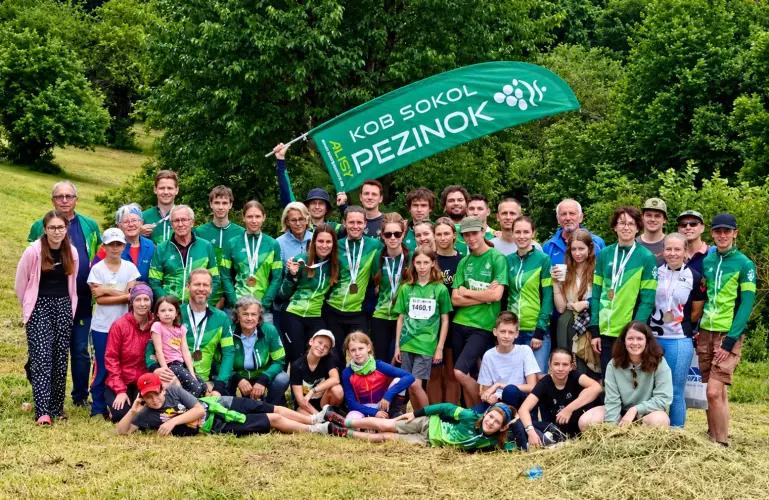
Orienteering – sport for body and mind
In today's fast-paced, tech-driven world, many of us are looking for a way to return to nature and truly clear our heads. If you are looking for a sport that tests your fitness as well as your ability to think logically under pressure, orienteering (or "O-run") is the perfect choice.
As manufacturers of sports jerseys, we know that orienteering places specific demands on clothing – it must be thorn-resistant, breathable, and lightweight. Let’s take a look at why this sport is so fascinating and why more and more people are falling for it.
A Look Back in Time Orienteering has its roots in Scandinavia at the end of the 19th century. Originally, it was a military exercise designed to train movement through unknown terrain using only a map and compass. The first public race was held in 1897 in Norway. The real boom came after 1919, when Swedish Major Ernst Killander began organizing races to attract young people to outdoor activities. Since then, it has spread worldwide, led by the International Orienteering Federation (IOF), and branched into disciplines like Mountain Bike Orienteering (MTBO) or Ski Orienteering.
The Rules: Find Your Own Way The principle is deceptively simple: visit checkpoints in the terrain in a specific order in the shortest possible time.
Map and Compass: These are your only tools. While modern GPS watches are allowed for recording your track, you cannot use them for navigation during the race. Orienteering maps are extremely detailed (scales 1:10,000 or 1:15,000) and capture every detail from rocks to vegetation density.
Controls (Lanterns): Stations are marked with white-and-orange triangular prisms. Every runner carries an electronic chip to "punch" at the control point.
Route Choice: This is the key to success. There is no single "correct" path. Is it better to run straight over a steep hill or take a longer, flatter path around it? The choice is yours.
Why is it so popular? Orienteering is often called "cunning running" or "chess on the run." While you can "switch off" during a road run, here you must be constantly alert.
Pure Nature: Forget asphalt. You can expect soft moss, blueberry bushes, deep forests, and breathtaking views.
For All Generations: You will see five-year-olds and eighty-year-old veterans alike. Categories are divided by age and difficulty.
Great Community: It’s a family sport. The atmosphere at the event center is always friendly, and runners spend hours after the race discussing their route choices.
Mental Reboot: Concentrating on the map is so intense that you forget all your work and personal worries.
What to wear? Since you'll be running through thick forests, you need gear that supports you:
Technical Jersey: Must be snag-resistant against branches and excellent at wicking sweat.
Running Pants (Tights or "O-pants"): Often reinforced at the shins for protection against thorns.
Studded Shoes: For maximum stability on slippery terrain and wet logs.
If you are tempted by an adventure where you write every meter of the route yourself, try orienteering. But beware – it's highly addictive!